

If you run a small business or nonprofit in a specific city, local SEO is the single highest-return marketing activity available to you. Not paid ads. Not social media. Not email. Local SEO.
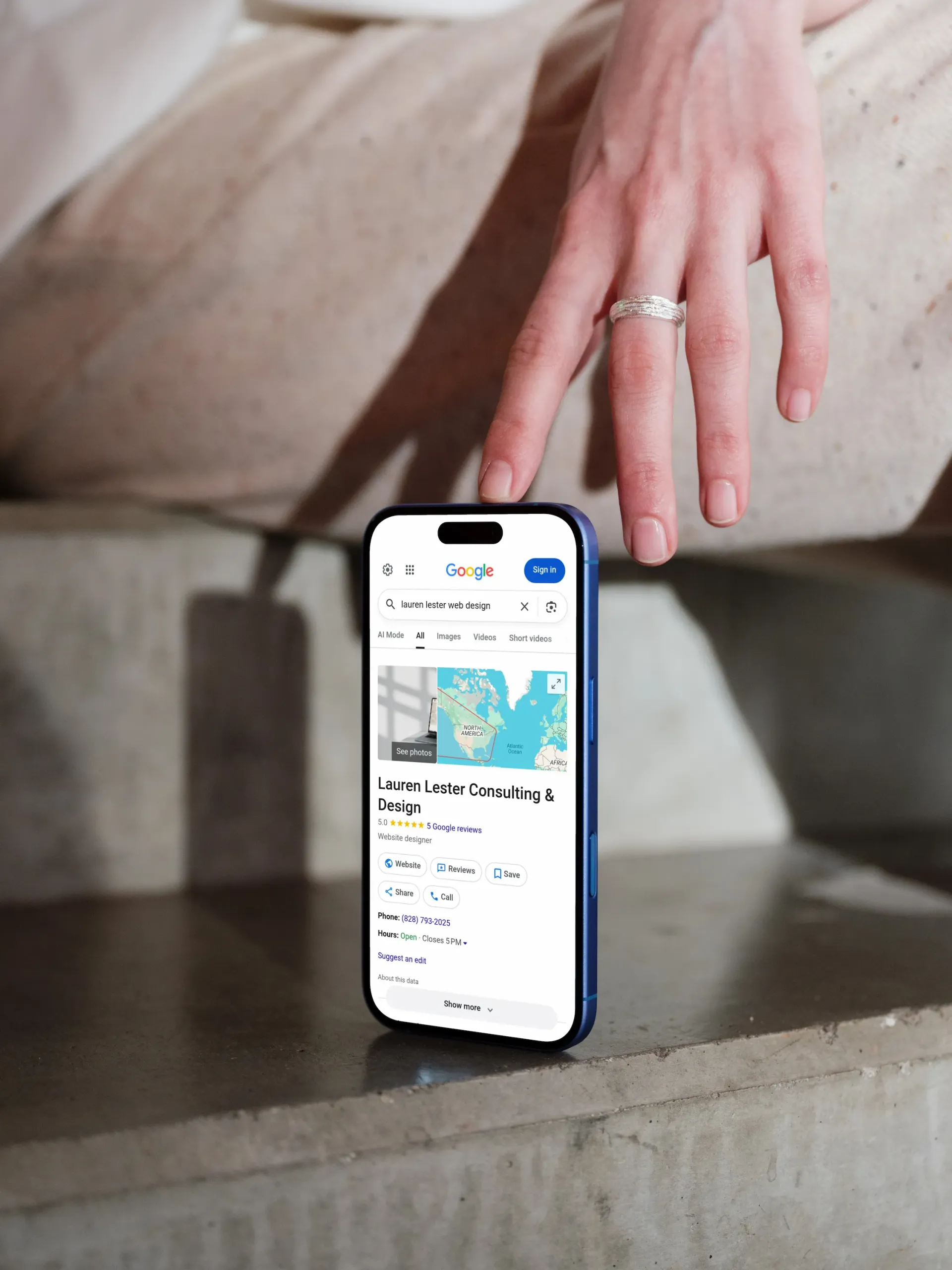
Here's why: when someone searches "web designer Portland" or "nonprofit accountant Seattle," they have already decided they want to hire someone. They are not browsing or comparing options in the abstract. They are looking for a specific type of service provider in a specific place, and they are ready to act. This is called an intent-based search. The businesses that show up at the top of those results win the work. The ones that do not, do not.
In 2026 this is truer than ever. AI Overviews have changed how people find generic information, but local search remains stubbornly human — Google cannot recommend a specific business in your city, and it knows it. Local intent queries are among the least affected by AI-generated results in all of search.
This guide covers everything you need to understand and implement local SEO in 2026 — from the foundations that most small businesses skip, to the tactics that actually move rankings, to the differences between optimizing a for-profit business versus a nonprofit.
TABLE OF CONTENTS
- What Local SEO Is
- How AI Overviews Are Changing Local Search
- Step 1: Complete Your Google Business Profile
- Step 2: Build NAP Consistency Across the Web
- Step 3: Optimize Your Website for Local Keywords
- Step 4: Create Local Content
- Step 5: Build Local Backlinks
- Step 6: Collect Reviews Systematically
- Local SEO for Nonprofits
- What to Track and When to Expect Results
- Common Local SEO Mistakes
- What AI Cannot Do for Your Local Search Presence
- FAQ
What Local SEO Is (and Why It Is Different From Regular SEO)
Regular SEO is about ranking for keywords without geographic intent. Local SEO is about ranking for keywords where location matters — either because the searcher included a city name, or because Google inferred local intent from their location.
Local SEO produces results in two distinct places:
The local pack — the map result with three business listings that appears at or near the top of the page for local searches. This is driven almost entirely by your Google Business Profile.
Organic results — the standard blue links below the map. These are driven by your website content, technical SEO, and backlinks, just like regular SEO, but with additional weight given to local signals like city name usage, local backlinks, and NAP consistency.
To win local search in 2026 you need to perform well in both. A strong Google Business Profile without a strong website will cap your growth. A strong website without a Google Business Profile will leave the map results entirely to your competitors.
How AI Overviews Are Changing Local Search (and Why Local Businesses Are Mostly Safe)
If you have noticed AI-generated summaries appearing at the top of Google results in 2026, you are not imagining it. Google's AI Overviews now appear on a significant portion of informational searches — and they are absorbing clicks that used to go to the top organic results.
The good news for local businesses and nonprofits: local search is one of the most AI Overview-resistant categories in all of SEO.
Here is why. AI Overviews are designed to answer questions where a single synthesized answer satisfies the searcher. "How does compound interest work" has a correct answer. "What are the symptoms of burnout" has a correct answer. Google can summarize those and the searcher does not need to click anywhere.
"Portland web designer" does not have a correct answer. Neither does "nonprofit accountant near me" or "Seattle plumber." These queries require a local, specific, human recommendation — and Google knows it. AI Overviews almost never appear for queries with local intent and when they do they reference the top search results anyways, because the AI knows the searcher intends to hire a business in their city.
What this means practically: the local pack and local organic results remain click-driven. A searcher who wants a Portland interior designer still has to click on a result, read a website, and make a human judgment. Your job is to be the result they click, and the website that earns their trust when they arrive.
Where local businesses do need to pay attention is in the informational content they publish. A generic blog post titled "What is local SEO" is exactly the kind of content an AI Overview will absorb. A post titled "Local SEO for Portland Businesses: A Step-by-Step Guide to Ranking in Your City" — with real local specificity, real examples, and a real point of view — is not. The AI cannot replicate your local knowledge. Use it aggressively in everything you publish.
Step 1: Claim and Fully Complete Your Google Business Profile
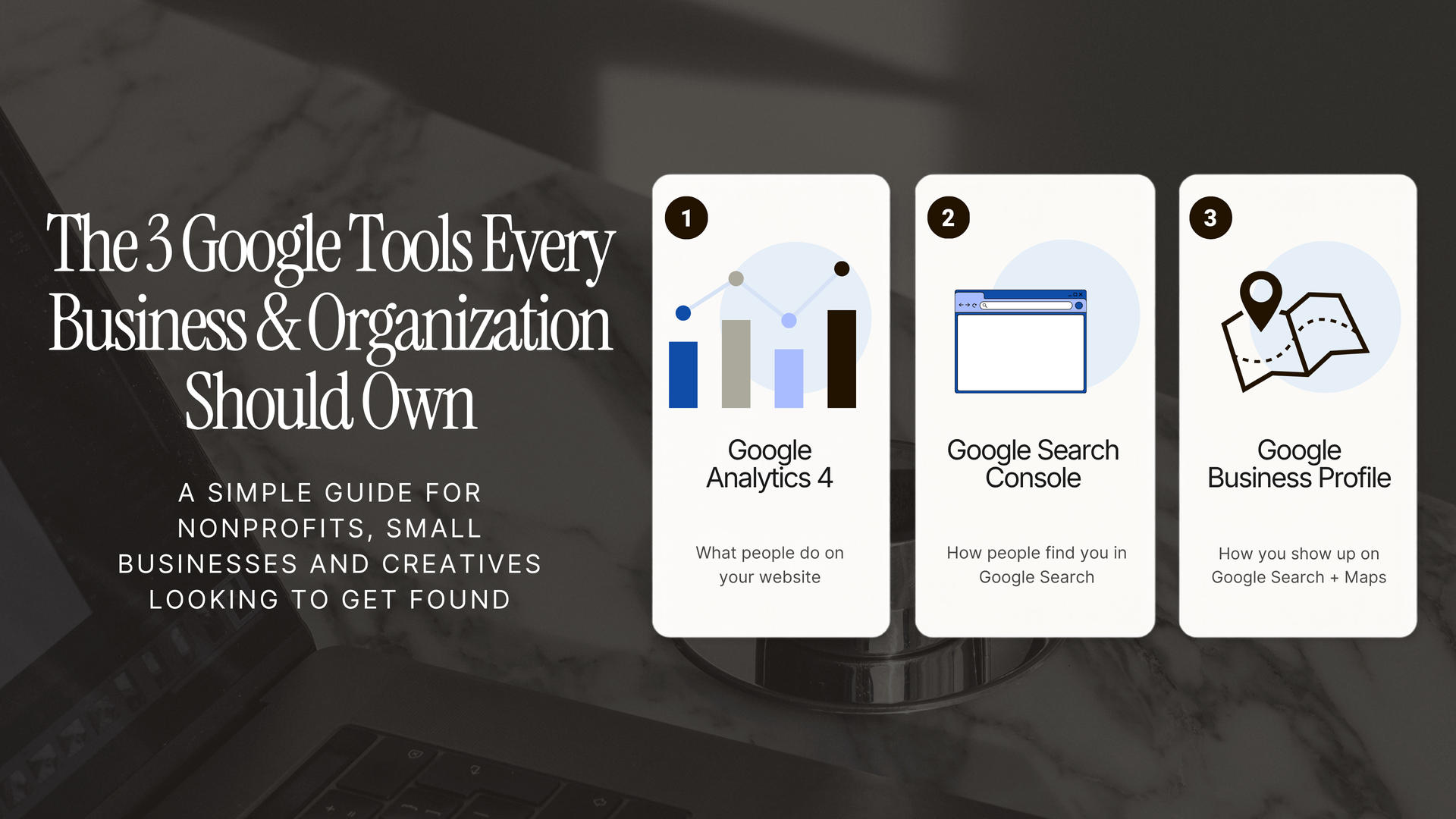
Your Google Business Profile (GBP) is the most important local SEO asset you have. It is free. It feeds the local pack directly. And the majority of small businesses and nonprofits have either not claimed it at all, or have left it half-finished.
Here is what a complete, optimized GBP looks like in 2026:
Business name — use your exact legal or operating name. Do not stuff keywords into your business name. Google can and does penalize this, and it looks unprofessional to prospective clients.
Category — your primary category is the single most important ranking signal in your GBP. Choose the most specific category that accurately describes your core service. Add secondary categories for additional services, but do not add categories that do not apply.
Address or service area — if you have a physical location clients visit, add your address. If you work remotely or travel to clients, set a service area instead. You can list multiple cities or an entire metro region.
Phone number and website — use a local phone number if possible. A local area code is a trust signal for local searchers and a mild local ranking signal.
Hours — keep these accurate and update them for holidays. Google surfaces hours prominently in search results, and incorrect hours generate negative reviews faster than almost anything else.
Services — this is the most underused section of GBP. Add every service you offer with a name and description. For a web design business, this means listing web design, brand strategy, website maintenance, nonprofit web design, and any other service separately. For a nonprofit, list your programs individually. Google uses these to match your profile to relevant searches.
Description — write 250–300 words describing what you do, who you serve, and what makes you different. Include your primary city and a few service terms naturally. This is not a keyword dump, it is a trust signal for humans who click through to learn more.
Photos — businesses with photos receive significantly more clicks than those without. Add a profile photo, a cover photo, and at least 5–10 photos of your workspace, team, or work. For nonprofits, photos of your programs, events, and clients (with permission) are all great!
Posts — GBP posts function like a lightweight social feed that appears directly in search results. Post weekly, even briefly. A sentence or two linking to a recent blog post, a client result, or a service update keeps your profile active and signals relevance to Google.
Reviews — covered in detail below, but reviews are among the top three ranking factors for local pack results. A strategy to collect them consistently is not optional.
Step 2: Build NAP Consistency Across the Web
NAP stands for Name, Address, Phone number. Google cross-references your business information across dozens of data sources — directory listings, citation sites, social profiles, local news mentions — and uses consistency as a trust signal.
If your business name appears as "John D. Plumbing" on your website, "John Daniel Plumbing" on Yelp, and "J.D Plumbing" on a local directory, Google treats these as potentially different entities. Inconsistency dilutes your local authority.
The fix is methodical:
- Decide on your exact business name, address format, and phone number
- Search for existing listings of your business name across the major citation sources
- Claim and correct any that have wrong or inconsistent information
- Build new listings on the sources you are not yet listed on
Priority citation sources for small businesses and nonprofits:
- Google Business Profile (primary)
- Yelp
- Bing Places
- Apple Maps
- Facebook Business
- Better Business Bureau
- Your local chamber of commerce
- Industry-specific directories (for nonprofits: Charity Navigator, GuideStar/Candid, local community foundations)
For nonprofits specifically,
GuideStar/Candid, and
Charity Navigator are high-authority sites in Google's eyes. A listing with accurate information on either of these is worth more than a dozen generic directory listings.
Step 3: Optimize Your Website for Local Keywords
Your GBP handles map rankings. Your website handles organic rankings. For local businesses and nonprofits, your website needs clear, consistent local signals throughout.
Your homepage H1 should include your city name and primary service. Not buried in the headline. "Portland Web Designer" or "Nonprofit Web Design Portland" or "Seattle Nonprofit Consulting" tells Google immediately what you do and where.
Location pages — if you serve multiple cities or neighborhoods, a dedicated page for each location you want to rank in is the correct approach. A single page trying to rank for ten cities will do it poorly. A dedicated page for each city, with unique content about your work in that area, will rank for each individually.
Service pages — each core service should have its own page targeting the combination of [service] + [city]. Not one page with all services listed. Separate pages with separate keyword targets, separate meta titles, and separate H1s.
Meta titles and descriptions — your meta title is the blue link text in search results. For local pages it should follow this structure: [Primary Keyword] [Business Name] or [Service] in [City] [Business Name].
Internal linking — every blog post you publish about a local topic should link back to the relevant service page. This tells Google that your service page is the authoritative destination for that topic.
Step 4: Create Local Content That National Competitors Cannot Replicate
This is where small businesses and nonprofits have a structural advantage over national agencies and large organizations. You know the local context. You have local client stories. You understand the specific challenges and culture of your city in ways that a national brand publishing generic content simply cannot replicate.
Local content wins because AI Overviews cannot tell someone which Portland web designer to hire. National competitors cannot authentically write about the specific challenges facing Portland nonprofits or Seattle small businesses. You can.
The content most at risk from AI Overviews is generic and definitional — "what is local SEO," "how does Google Business Profile work." If your blog strategy is built around those queries, expect AI to absorb most of the clicks. The content that survives is specific, local, opinionated, and backed by real experience. Write that instead.
What local content looks like in practice:
Share local case studies with real outcomes. Not "we helped a local restaurant increase reservations." Specific: the type of business, the problem they faced, the solution you implemented, the measurable result. Local backlink potential is highest when the case study names real organizations that will share it.
Create city-specific guides. "What does a kitchen renovation actually cost in Denver" captures a searcher that "kitchen renovation cost" never will — and the local competition is dramatically lower than the national term.
Create local industry roundups. "The best resources for Chicago nonprofits applying for city grants" earns links from every organization you mention and signals deep local expertise to Google.
Share your own professional opinion about local topics. "Why I recommend against certain contractors for historic homes in this neighborhood" is content that cannot be replicated by anyone except a local expert with real experience, and it is exactly the kind of first-person E-E-A-T content Google rewards in 2026.
Publish consistently. The compounding effect of local content is real but it only works if publishing never stops. Two posts per week is sustainable and meaningful. Two posts per month is better than nothing. Two posts in January and then silence is worse than a steady cadence.
Step 5: Build Local Backlinks
Backlinks — other websites linking to yours — remain one of the strongest ranking signals in Google's algorithm. For local SEO specifically, local backlinks carry extra weight because they are geographically relevant.
The most effective local link sources:
Client websites — every client you work with can have a footer credit or attribution linking back to your relevant service page. Not your homepage — the specific service page you want to rank. Keyword-rich anchor text pointing directly to that page compounds over time as your client base grows.
Local business directories and chambers — most cities have regional business directories, neighborhood associations, and chamber of commerce member listings with a free option. Each listing is a backlink. Collectively they build a pattern of local relevance that Google uses to verify your geographic authority.
Local press and publications — a mention in your city's business journal, a regional newspaper, or a neighborhood publication carries more local SEO weight than a mention in a national publication with no geographic relevance. Pitch local journalists when you have a genuine story — a business milestone, a community initiative, a local hire, a notable client result.
Partner organizations — businesses that serve overlapping audiences without competing directly are natural link partners. A web designer and a copywriter. A nonprofit and its fiscal sponsor. A restaurant and a local food tour company. A link from a partner's resources or recommended vendors page is free to pursue and carries real authority.
Your professional networks — industry associations, business networking groups, and nonprofit coalitions often maintain member directories. A listing in each is both a backlink and a visibility opportunity for the humans who browse them.
Guest posts — writing a guest post for a local business blog, a regional industry publication, or a city-focused newsletter earns a backlink and puts your name in front of a relevant local audience. One per month at a consistent pace compounds significantly over a year.
Step 6: Collect Reviews Systematically
Reviews are among the top three ranking factors for local pack results. The quantity, recency, and sentiment of your reviews directly affect where you appear in the map results.
Most small businesses and nonprofits collect reviews randomly — occasionally asking a happy client after a project, hoping they follow through. This is not a strategy.
A systematic review collection process looks like this:
- At project completion, send a brief email to every client thanking them and including a direct link to your GBP review form
- Make it as easy as possible — the link should go directly to the review box, not to your general profile
- Follow up once, one week later, if they have not left a review
- For nonprofits, ask volunteers, board members, and program participants (where appropriate) in addition to organizational partners
Respond to every review, positive and negative. A thoughtful response to a negative review often matters more to prospective clients than the review itself. It signals that you take accountability seriously and treat people fairly.
Do not offer incentives for reviews. Google's terms prohibit this and the risk of suspension is not worth it.
Local SEO for Nonprofits: What Is Different
Most local SEO guidance is written for businesses trying to generate revenue. Nonprofits have different goals — donor acquisition, volunteer recruitment, program awareness, grant credibility — and the local SEO strategy should reflect that.
Your "customers" are multiple audiences at once. Donors searching for organizations to support, volunteers looking for opportunities, clients seeking services, and grant-makers researching potential grantees may all find you through local search. Your landing pages need to speak to each.
GBP category selection is trickier. Nonprofits often span multiple functions. Choose the primary category that reflects your most important audience-facing activity, then add secondary categories for others.
Charity Navigator, Candid, and GuideStar are local SEO assets. These high-authority nonprofit directories create backlinks and add NAP consistency. Claiming and completing your profile on both is free and takes about an hour.
Donor trust is your conversion goal. The local SEO goal for a nonprofit is not just ranking — it is earning enough trust in the search result itself (star rating, review count, profile completeness) that a prospective donor clicks through. A fully built GBP with photos and recent posts does this better than any paid ad.
Program pages function like service pages. Each program your nonprofit runs should have its own page on your website, optimized for the specific audience it serves. A domestic violence nonprofit should have separate pages for emergency shelter, legal advocacy, and counseling — each targeting the terms those specific searchers use.
Read more -> SEO 101
Read more -> Nonprofit Web Design Services
What to Track and When to Expect Results
Local SEO is not a fast channel. It is a compounding one and one that should be considered as part of any website maintenance plan. Here is a realistic timeline and what to track at each stage.
Months 1–2: Foundation work. GBP complete, NAP citations consistent, on-page optimization done. Nothing dramatic will happen in rankings yet, but you are building the infrastructure everything else depends on.
One calibration note for 2026: non-branded impressions in GSC may look different than they did two or three years ago because AI Overviews are suppressing clicks on some informational queries even when your page ranks well. Watch impressions and clicks together. Impressions climbing without clicks may mean an AIO is appearing above your result — a signal to add more local specificity, first-person experience, or a stronger meta description that gives the searcher a reason to click past the AI answer.
Months 2–4: First content and first links. Organic rankings for new content begin to appear, typically outside the top 20 initially. GBP rankings may improve for lower-competition terms. Track non-branded impressions in Google Search Console — this number should be climbing.
Months 4–6: Rankings consolidate. Content published in months 1–3 starts moving up. Local pack appearances increase.
Months 6–12: Compounding begins. A consistent publishing cadence and growing backlink profile start to lift your entire domain.
Year 2 and beyond: The content published in year one is still earning traffic. New content benefits from the domain authority built in year one. This is when local SEO starts to feel like a channel rather than a project.
The metric that matters most in the early months is non-branded impressions in Google Search Console — the number of times your site appeared in search results for queries that were not your own name. This number should increase every month with consistent publishing. If it is not, something in the foundation needs attention.
Common Local SEO Mistakes Small Businesses and Nonprofits Make
Keyword stuffing the GBP business name. "Portland Web Design Lauren Lester Consulting & Design" as a business name is against Google's terms and can get your profile suspended. Use just your official business name.
Ignoring the GBP Services section. This is where you tell Google specifically what you offer. Most profiles leave it empty.
Publishing one location page trying to rank for every city. One page, ten cities, zero rankings. Build individual pages for the locations that matter most.
Stopping after the initial setup. Local SEO is not a one-time task. It is an ongoing activity. GBP posts, review collection, content publishing, and link building need to be on a regular schedule.
Not asking for reviews. Happy clients will not leave a review unprompted in most cases. The ask is necessary.
Chasing high-KD terms before the foundations are in place. "Portland Attorney" at KD 66 is not the right first target for a brand-new website. Start with the low-KD local terms, build authority, then pursue the competitive ones.
What AI Cannot Do for Your Local Search Presence
It is worth being direct about this: AI tools can help you write content, audit your website, and research keywords. What they cannot do is replace the signals that actually drive local rankings, know how to build a integrated content plan with pillar posts and supporting content, or how to implement.
Google's local algorithm in 2026 rewards things that are inherently human and local:
Real reviews from real clients. An AI cannot generate authentic reviews from your actual customers. The volume, recency, and sentiment of your reviews is something only your real client relationships can build.
Local backlinks from organizations that know you. A link from your local chamber of commerce, a partner nonprofit, or a client's website carries weight precisely because it reflects a real local relationship. No AI tool can create that.
First-person local expertise. A blog post that says "here is what I have seen work for Portland nonprofits over 14 years of projects" is content Google's E-E-A-T framework specifically rewards — and content that no AI can produce on your behalf, because the experience is yours.
A complete, actively managed Google Business Profile. GBP is a living asset. The businesses that win local pack rankings in 2026 are the ones posting weekly, responding to reviews within 24 hours, and updating their services list as their offerings evolve. Consistency over time is a signal AI tools cannot manufacture.
The businesses that will struggle in AI-era search are the ones publishing generic, undifferentiated content and hoping volume alone carries them. The ones that will win are publishing specific, experience-backed, locally-rooted content consistently — which is exactly what a well-run small business or nonprofit is positioned to do.
LOCAL SEO FAQ'S
How long does local SEO take to show results?
Most businesses see meaningful movement in Google Business Profile rankings within 60–90 days of a fully optimized profile. Organic website rankings take longer — typically 4–6 months for low-competition terms and 6–12 months for competitive ones. The timeline compresses when you publish content consistently and build backlinks actively.
How many Google reviews do I need to rank in the local pack?
There is no magic number, but in most mid-size cities a business with 15–25 recent, high-quality reviews is competitive. In smaller markets, 5–10 can be enough. Recency matters — a business with 50 reviews from three years ago often ranks below one with 20 reviews from the past six months.
Do I need a physical address to rank in local search?
No. Google allows service-area businesses to rank locally without displaying a physical address. You define your service area by city, region, or radius, and Google uses that to determine which local searches you are eligible to appear in.
What is the single most important thing I can do for local SEO today?
If you have not claimed and fully completed your Google Business Profile, do that first. It is free, it directly feeds local pack rankings, and most of your competitors have not done it well. A complete GBP with accurate categories, a full services list, recent photos, and a review collection strategy will outperform most of what your local competitors are doing.
Can I do local SEO myself or do I need to hire someone?
The foundation — GBP setup, NAP consistency, on-page optimization — is something most business owners can do themselves with a few hours of focused work. The ongoing activities — content publishing, link building, technical audits — are where professional help tends to pay for itself, particularly if your time is better spent running your business or serving your clients.
Local SEO is one of the few marketing channels where a small, local business or nonprofit can legitimately outrank organizations with much larger budgets. The national agencies do not have your local knowledge. The large nonprofits do not have your community relationships. Google rewards specificity, authenticity, and consistency — and those are things any well-run local organization can deliver.
If you are ready to build a website that is designed from the ground up to rank in local search,
get in touch to talk about your project.

Don't know where to start? Get your free mini audit.
Actionable tips, resources, and feedback to get you moving.